



Tim Cahill is a figure synonymous with Australian football. Whether it's his iconic goals in Australia's FIFA World Cup 2006™ victory against Japan, or perhaps his stunner against the Netherlands in the 2014 global finals that was nominated for the Puskas award, his highlights package for the CommBank Socceroos rivals anyone in history.
The legendary attacking midfielder has now been honoured with a place amongst the greats in the Football Australia Hall of Fame.
Take a walk down memory lane as we look back on Cahill's career, as a boy from Western Sydney became an Australian football icon.

Early Days and Socceroos Debut
Cahill was born in Sydney on 6 December, 1979. He grew up playing with his brothers, Sean and Chris, for various clubs based in Sydney's west. Slight of stature, the young Cahill found himself frustrated with a lack of opportunities, until he finally broke through to play senior football for Sydney United as a 17-year-old.
In late 1997, Cahill moved to England to gamble on his football career. It paid off - he signed for Milwall and debuted the next year, going on to make 217 appearances and scoring 52 goals for The Lions.
He played two games for Western Samoa U20s, where he lived for three years as a child. This decision as a 14-year-old threatened to scupper his international career before it began; however, a law change by FIFA in 2003 opened the door for him to switch allegiances to Australia.
Cahill debuted against South Africa in an international friendly on 30 March 2004 at the age of 24.
“I received my first cap in a little presentation in the dressing room and there are no words to describe how I feel,” he said at the time.
"It was always in the back of my mind that I would never get a chance to play on the world stage, or even get a chance to be in the squad."
The Golden Generation
Cahill moved to Everton, the club he is perhaps best known for, at the beginning of the 2004/05 season. Now able to represent his country, he set about trying to establish himself under Frank Farina and then, from mid-2005, Guus Hiddink.
The midfielder played the full match in the famous World Cup qualifier second leg against Uruguay in November 2005. Eight months later, he was a big part of the team looking to make history on the biggest stage of all.
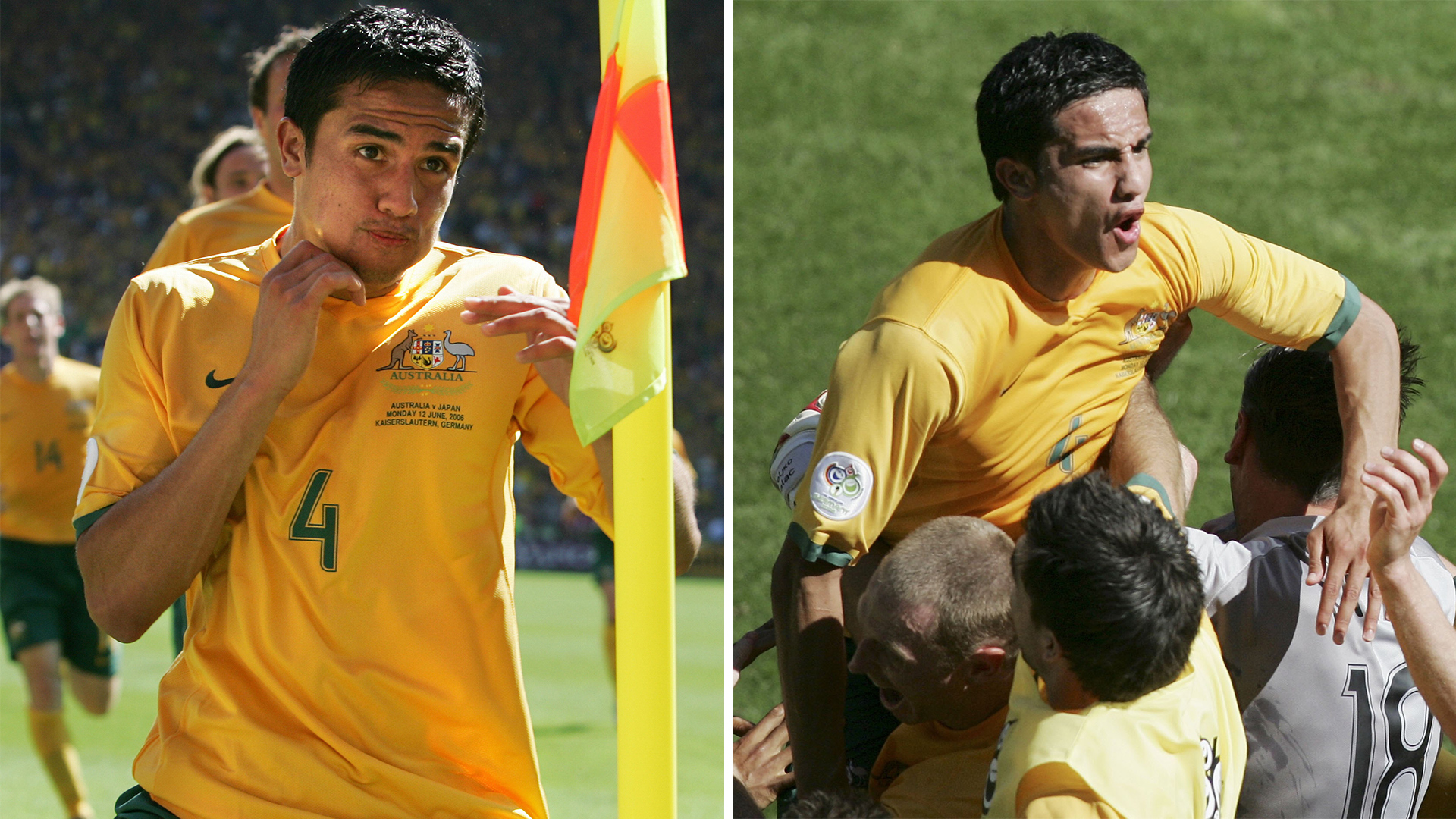
And make history they did, with Cahill's late brace against Japan helping Australia to their first ever World Cup victory at the FIFA World Cup Germany 2006™. Cahill's 84th-minute equaliser was the first goal that the team had ever scored at a World Cup.
"It was like a dream. I don’t know how it happened, and I didn’t know it was the first goal scored for Australia in a World Cup until after the game," he recalled in 2020.
"Soon after, the ball was played back to me and I rolled it with the top of my foot. The goalkeeper stands flat-footed and I give him the eyes and it’s the first goal I’ve probably ever scored outside the 18-yard box in my life.
"It hit one post and went across the other side, hit the other post and then the back of the net. My second-ever goal at a World Cup. All in the space of minutes."
Australia advanced from the group, but were controversially eliminated by Italy in the Round of 16.
A lowlight, and a chance for redemption
Australia went into the FIFA World Cup South Africa 2010™ with heightened expectations after the heroics of four years prior.
"There is increased expectation on us this time, maybe among the fans but definitely among the media," Cahill reflected before the tournament.
The World Cup began in disaster. A red card to Cahill in the opening game against Germany threatened to derail his tournament before it began. The 4-0 defeat was only salt in the wound for the devastated Australian.
"I don't have a clue what will happen now, but what I can say for certain is that it's the hardest thing I have ever had to deal with as a footballer," he said post-match.
"Nothing comes close to this. It was my dream to play in my second World Cup and it was so special for me to represent my country. To have it snatched away from me so quickly is a feeling I never want to experience again."
Australia got through a 1-1 draw against Ghana without their talisman, only to put it all on the line against Serbia. Cahill scored the first goal in a 2-1 victory, but it wasn't enough. The team would miss out on making it to the Round of 16 on goal difference.
Puskas Nomination
The FIFA World Cup Brazil 2014™ was a disappointing one for Australia. In the process of overhauling the playing style under new coach Ange Postecoglou, the Socceroos did not secure a single point from the global finals in a tough group of Chile, the Netherlands, and Spain.
It is that second game against the Dutch, however, that will be remembered for one very special moment - a Puskas award-nominated stunner of a strike from one Tim Cahill. The goal is one of the greatest in FIFA World Cup history.
“It was a great ball by McGowan and I couldn’t bring it down, so [I went] boom, first time,” Cahill recalled in 2018.
His teammates lauded his ability to rise for the big moments.
"Timmy's a goal scorer," Luke Wilkshire told Football Australia after his induction into the Hall of Fame.
"He scored some amazing goals, and had that nose for goal. When you do that, you make an impact at any level because you know the lights are shining on you."
Asian Cup Glory
Expectations were high ahead of the AFC Asian Cup 2015™ on home soil. Cahill himself expressed pre-tournament that the team were more than capable of walking away with the trophy.
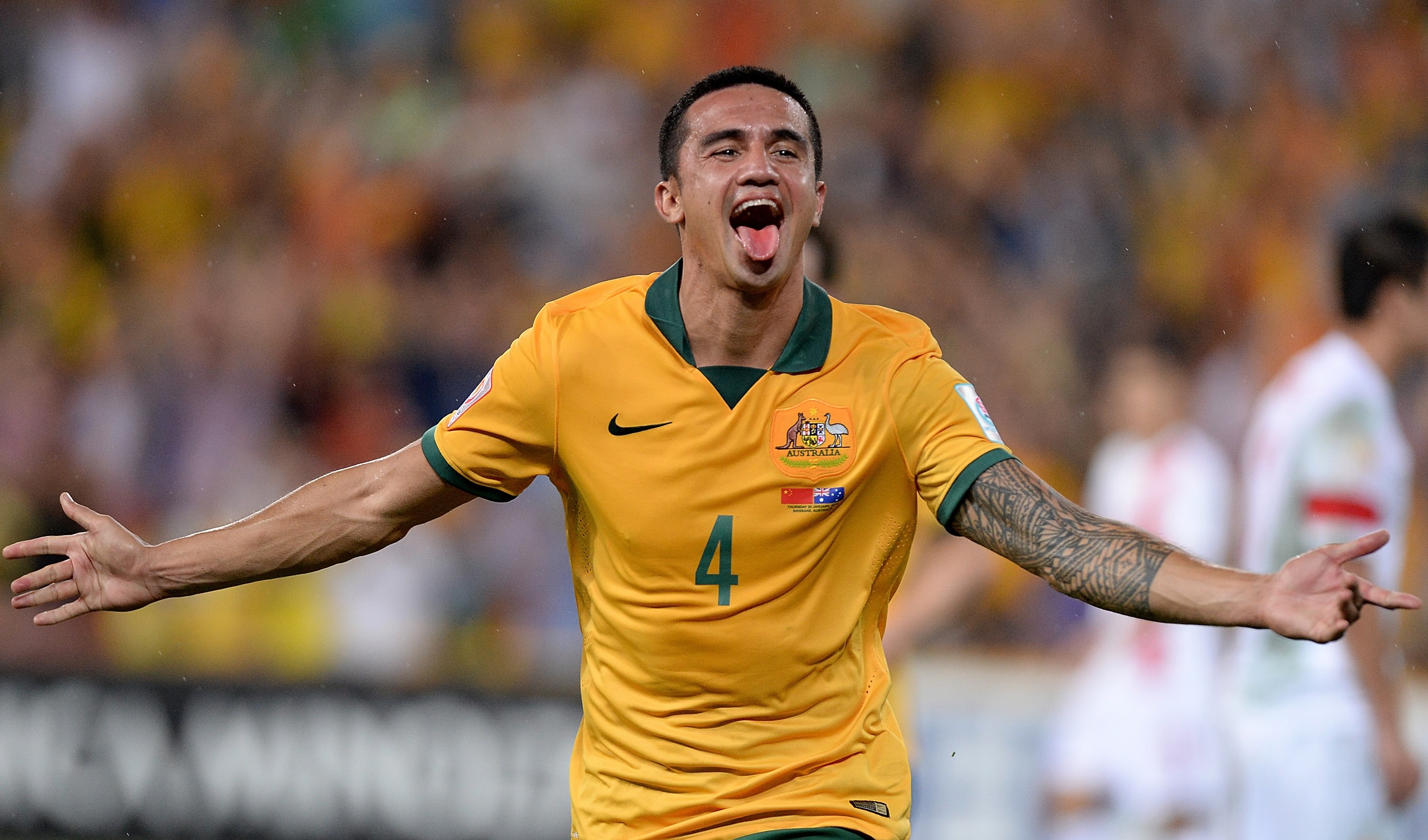
He scored a vital equaliser against Kuwait in the first game of the group stage, before a brace against China in the quarter-final - including a bicycle kick goal - helped build the momentum that the team would ride all the way to the trophy.
Cahill started in the final against South Korea and it was only fitting that one of Australia's greatest ever in green and gold helped the Socceroos to their first ever Asian Cup trophy.
"Half of the stadium were people he knew - he won't mind me saying that!" teammate and friend Mile Jedinak joked.
"Relatives, friends and family members were going to support him, with the game being in Sydney, having grown up in Sydney, and knowing what it meant to everybody there at the game.
"Being able to see him experience that... we spent a little bit of time after that together, and being able to be next to him seeing him experience that, when you look back on it, I was very fortunate.
"We know the journey. Having the tournament in Australia, seeing the generational buzz and what it was doing for people - to go through and experience that with someone like him, knowing his own journey, I'm very fortunate."
Legacy
Tim Cahill retired from national team duty in November, 2018, in a 3-0 victory over Lebanon. He had just returned from his fourth World Cup in Russia, and the then-38-year-old left knowing he could still contribute at the top level.
"During those clutch moments, in those moments where someone needed to stand up with a contribution or a goal contribution, history says more often than not it was him. That's no coincidence," Jedinak said.
His international career spanned more than 14 years. He played for his country 108 times. He is the team's leading goal scorer, with a total of 50 - a record that doesn't seem like it will be broken any time soon.
He also holds the record of being Australia's oldest-ever goalscorer, scoring the winner against Syria in October 2017 at 37 years and 308 days. The record speaks to the longevity of his impact in big moments.
"He's achieved everything in football," Wilkshire said.
"On the pitch and off the pitch, he epitomises what it is to be a professional footballer - his work ethic, the road that he's travelled to get to where he is, and to continually stay at the top the way he has done, in the manner he has done. He deserves all the credit that he gets."